
Digital transformation is usually seen as a business issue. Digital transformation is not a business problem. It is an architecture problem.
Companies spend a lot of money on cloud services, artificial intelligence and new tools. Many transformation projects stall, do not deliver what they promise or fail completely.
The reason for this is not that companies do not want to change or that they do not have money.
It is the foundation that everything is built on..
1. Old Way of Thinking in New Systems
Many companies use technologies but they still use old architectural patterns. They move to the cloud. They still use old designs that are not flexible.
They use microservices. They still have many dependencies that are closely tied together.
The result is a system that looks new on the surface. It still has old problems underneath.
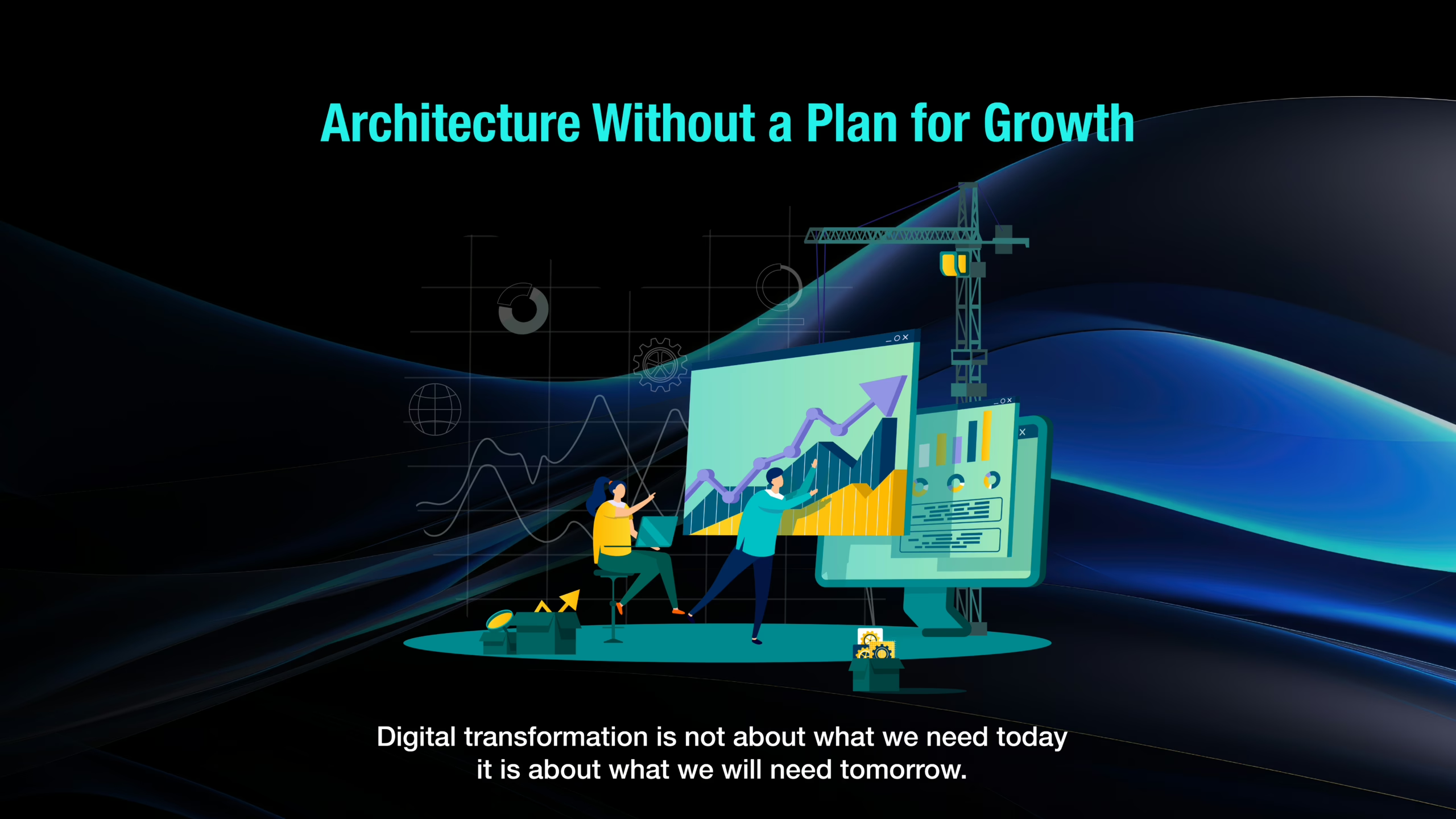
2. Architecture Without a Plan for Growth
Digital transformation is not about what we need today it is about what we will need tomorrow.
Without boundaries defined service ownership and a data architecture that can grow systems become fragile as they get bigger.
What works for one thousand users does not work for one hundred thousand users.
3. Not Making Data a Priority
Most transformation projects treat data as something that’s not very important.
Data is actually the core of the system.
Without a data architecture artificial intelligence projects fail insights are not consistent and decision-making is slow.
No amount of tools can fix problems with data.
4. Making the System Too Complicated
In the rush to modernize teams often make the system too complicated.
They use many tools, too many abstractions and too many layers.
Complexity does not work well simplicity does.
The complicated the system is, the harder it is to maintain, debug and improve.

5. DevOps system Without a Good Architecture
Using integration and continuous deployment pipelines does not guarantee speed.
If the underlying architecture is not stable releases break often dependencies block deployments and rollbacks are common.
You cannot use automation to fix a design.
6. Not system Being Able to See What is Happening
You cannot fix problems that you cannot see.
Without built-in observability failures are only fixed after they happen the root causes
are not downtime increases.
Modern systems require visibility as a priority not something that is added later.
The Bottom Line
Digital transformation does not fail in meetings with people.It fails in the design of the system.
The companies that succeed do not just use technologies they rethink the architecture from the beginning. They make systems, clear boundaries and scalable foundations.
Because in the end technology makes transformation possible. Architecture determines whether it will last.
Digital transformation is about architecture and architecture is, about transformation.