
Logistics operations depend on making thousands of decisions every day: which vehicle should handle a shipment, which route should a driver take, when will an order arrive, and how can transportation costs be controlled without compromising delivery commitments?
Traditionally, route planning has relied on predefined routes, historical travel patterns, fixed schedules, and rules created by logistics planners. These methods can work well when conditions remain predictable. However, modern logistics networks operate in environments where conditions can change continuously.
Traffic congestion, weather, road restrictions, vehicle availability, changing customer priorities, shipment delays, and unexpected disruptions can quickly make a previously optimized route inefficient.
This is where AI-powered route planning is changing the way transportation decisions are made.
Instead of treating route optimization as a one-time planning activity, AI enables organizations to move toward continuous, data-driven optimization.
From Static Route Planning to Dynamic Optimization
Traditional route planning typically answers a question such as:
“What is the most efficient route based on the information available when the plan was created?”
AI-powered route planning takes a different approach:
“Given everything happening right now, what is the best decision?”
AI systems can analyze multiple variables simultaneously, including GPS and telematics data, traffic conditions, delivery windows, vehicle capacity, historical delivery performance, weather conditions, road restrictions, driver behavior, shipment priorities, and real-time operational events.
As conditions change, the system can continuously evaluate the impact on planned routes and identify alternatives.
This creates a more dynamic transportation model where routes are not simply planned once and followed until completion. Instead, they can be reassessed as new information becomes available.
The Role of Real-Time Data
The effectiveness of AI-powered route planning depends heavily on the availability of reliable data.
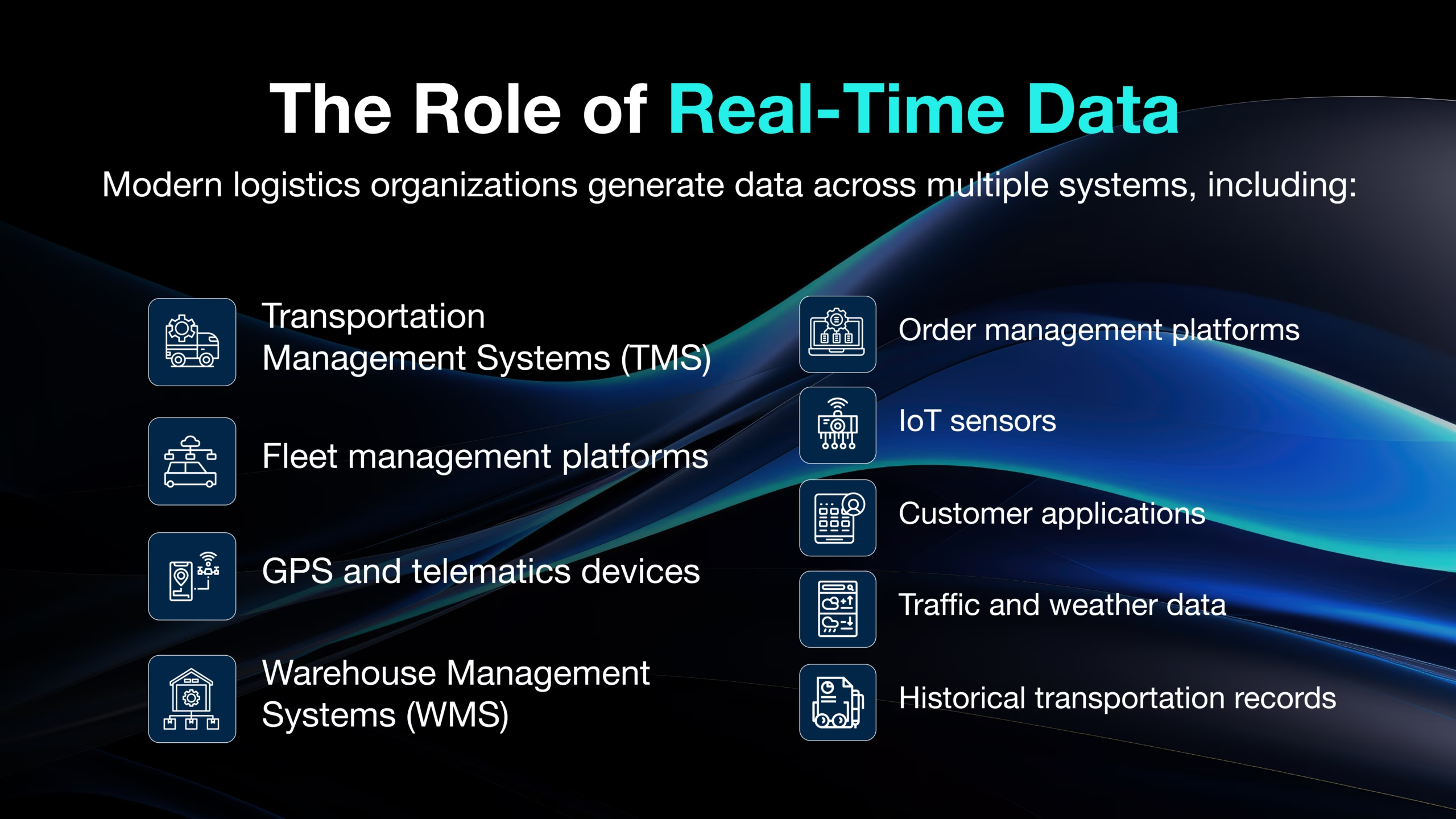
When these data sources operate independently, logistics teams may have a fragmented view of transportation operations.
A modern AI-enabled architecture can bring these sources together through data integration and real-time pipelines. This creates a continuously updated operational picture that AI models can use to support routing decisions.
The result is a shift from historical planning to real-time intelligence.
The result is a shift from historical planning to real-time intelligence.
1. Real-Time Route Optimization
One of the most direct applications of AI is dynamic route adjustment.
Consider a delivery vehicle traveling toward a destination when an unexpected traffic disruption occurs. A traditional system may continue following the original route or require a planner to intervene manually.
An AI-powered system can evaluate the disruption, compare alternative routes, consider the remaining delivery schedule, and determine whether rerouting would improve the overall outcome.
The decision can take into account multiple objectives rather than simply selecting the shortest distance.
For example:
Travel Time + Delivery Window + Vehicle Capacity + Traffic + Route Constraints + Operational Cost
This allows organizations to optimize routes according to actual business priorities.
2. Improving Fleet Utilization
Route optimization is not limited to roads. It also involves determining how available vehicles should be utilized.
AI can analyze vehicle location, capacity, shipment characteristics, delivery schedules, and operational constraints to support better fleet allocation.
For logistics operators managing large fleets, even small improvements in vehicle utilization can have a significant operational impact.
Instead of assigning vehicles based primarily on static schedules, organizations can use data-driven models to make more responsive allocation decisions.
3. Reducing Empty Miles
Empty miles remain an important transportation challenge.
A vehicle traveling without a load consumes fuel, time, and capacity without generating corresponding transportation value.
AI can analyze historical shipment patterns, delivery locations, pickup opportunities, vehicle availability, and transportation demand to identify potential opportunities for reducing unnecessary empty travel.
This can support better planning for:
- Backhaul opportunities
- Load consolidation
- Multi-stop routes
- Shipment-to-vehicle matching
- Regional transportation planning
The objective is not simply to reduce distance, but to make better use of the transportation capacity already available.
4. Improving ETA Prediction
Accurate estimated arrival times are increasingly important for logistics operations and customer experience.
A basic ETA calculation may rely primarily on distance and expected travel time. However, actual delivery performance depends on many additional factors.
AI models can incorporate historical delivery patterns, traffic conditions, route characteristics, weather, time of day, vehicle behavior, and other operational variables to improve ETA predictions.
More accurate ETAs can help logistics teams plan resources more effectively while providing customers with better delivery visibility.
5. Predicting and Managing Exceptions
One of the biggest opportunities for AI is moving logistics operations from reactive exception management to proactive intervention.
Instead of waiting for a delivery to become late, AI can identify signals that suggest a delay may occur.
For example, a combination of:
Route Deviation + Increasing Traffic + Reduced Vehicle Speed + Approaching Delivery Deadline
could indicate an elevated risk of missing the delivery window.
An intelligent system can identify this pattern and alert the operations team before the exception becomes critical.
This creates an opportunity to intervene earlier—whether that means changing the route, reallocating a shipment, adjusting a delivery sequence, or communicating with the customer.
6. Balancing Multiple Objectives
Real-world logistics optimization rarely has a single objective.
The shortest route is not always the cheapest route. The fastest route may not provide the best fleet utilization. A route that minimizes fuel consumption may conflict with delivery-window requirements.
AI-powered optimization can evaluate multiple objectives simultaneously.
Depending on the organization’s priorities, models can consider:
Cost | Time | Distance | Fuel | Capacity | Delivery SLA | Vehicle Availability | Customer Priority
This allows route planning to become more closely aligned with broader business objectives.
Building an AI-Ready Logistics Foundation
AI-powered route planning is ultimately a data and engineering challenge as much as it is an AI challenge.
Organizations need reliable data pipelines, scalable cloud infrastructure, system integration, analytics capabilities, and appropriate AI models.
A modern architecture may connect operational systems and real-time data sources into a centralized data platform, where information can be processed and made available to optimization and predictive models.
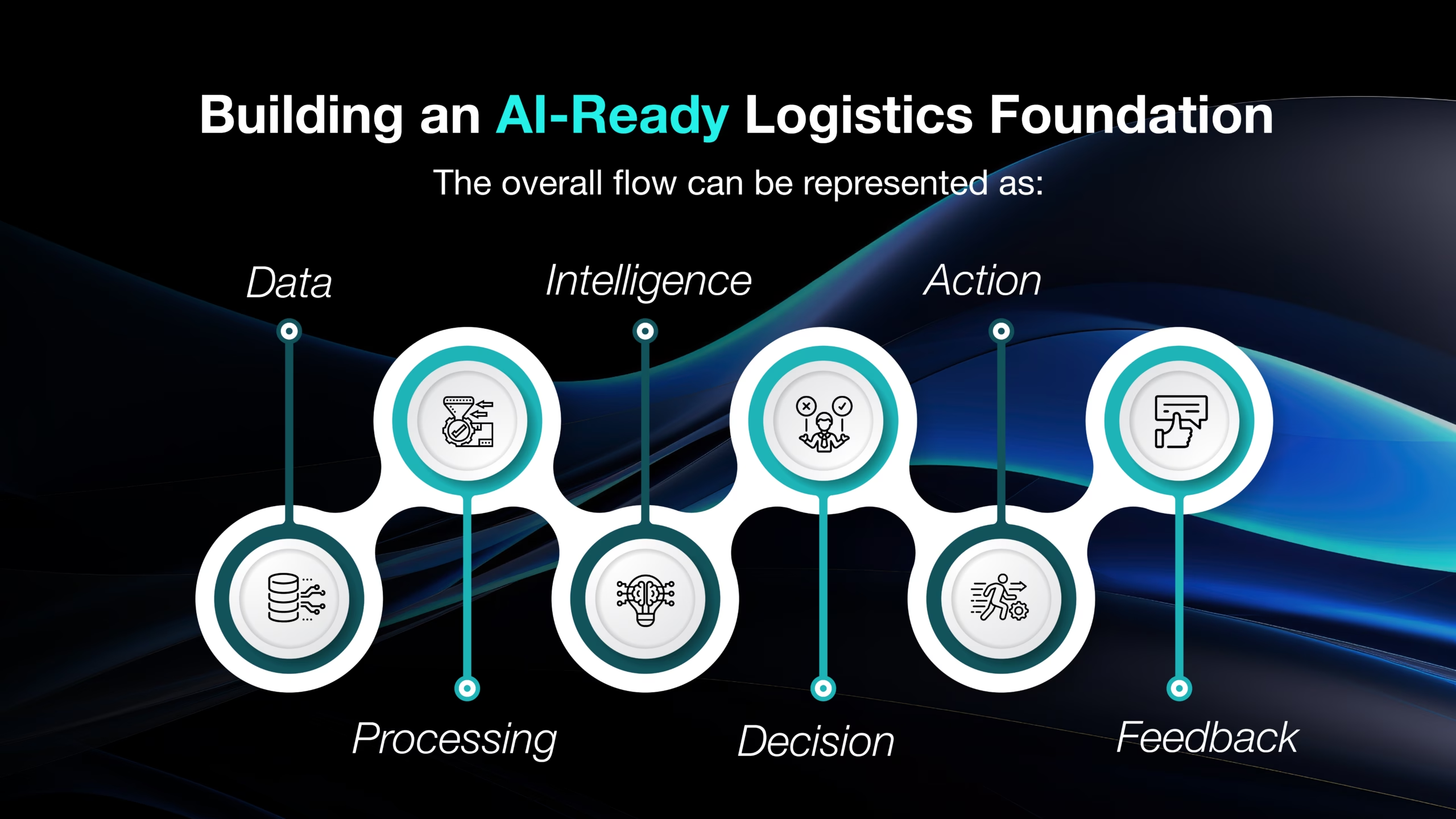
The feedback loop is particularly important.
As new delivery outcomes become available, organizations can use those results to evaluate model performance and continuously improve future decisions.
What Comes Next?
The evolution of route planning is likely to move beyond simply recommending better routes.
With advances in AI agents, real-time analytics, IoT, and connected transportation systems, intelligent systems can increasingly support broader logistics decisions.
An AI system could potentially evaluate a disruption, assess its impact across multiple shipments, recommend alternative routes, identify available fleet capacity, and support the coordination required to resolve the issue.
This moves logistics toward a model where intelligence is embedded directly into operational workflows.
However, successful adoption requires more than deploying an AI model. Organizations need strong data foundations, integration capabilities, security, governance, human oversight, and scalable technology architecture.
Conclusion
The future of logistics route planning is not about replacing planners with algorithms. It is about giving logistics teams the intelligence they need to make better decisions in increasingly complex environments.
Traditional systems plan around what is known at the beginning of a journey. AI-powered systems can continuously respond to what is happening throughout the journey.
That difference can help organizations improve route efficiency, fleet utilization, delivery visibility, exception management, and overall transportation performance.
At Cognine, we see an opportunity to bring together AI, data engineering, cloud, and digital engineering to help logistics organizations build more intelligent and adaptable transportation operations.
The best route is no longer simply the one planned at the start of the journey.
It is the one that continuously adapts to what happens along the way.