
When Retrieval-Augmented Generation (RAG) first gained traction, vector databases quickly became the centerpiece of enterprise AI architectures. Semantic search enabled applications to retrieve information based on meaning rather than keywords, significantly improving the performance of AI assistants and knowledge search.
But as organizations moved from proofs of concept to production deployments, a new challenge emerged: vector search alone wasn’t enough.
Teams discovered that while semantic retrieval excels at understanding intent, it often struggles with exact identifiers, product names, version numbers, policy IDs, error codes, and other structured enterprise data. The result is incomplete or inaccurate context for large language models, leading to responses that users quickly lose confidence in.
Today, leading enterprise AI systems rarely rely on pure vector search. Instead, they combine semantic search, keyword search, metadata filtering, and reranking to deliver more accurate and reliable results. This approach, known as hybrid retrieval, is rapidly becoming the standard architecture for enterprise AI.
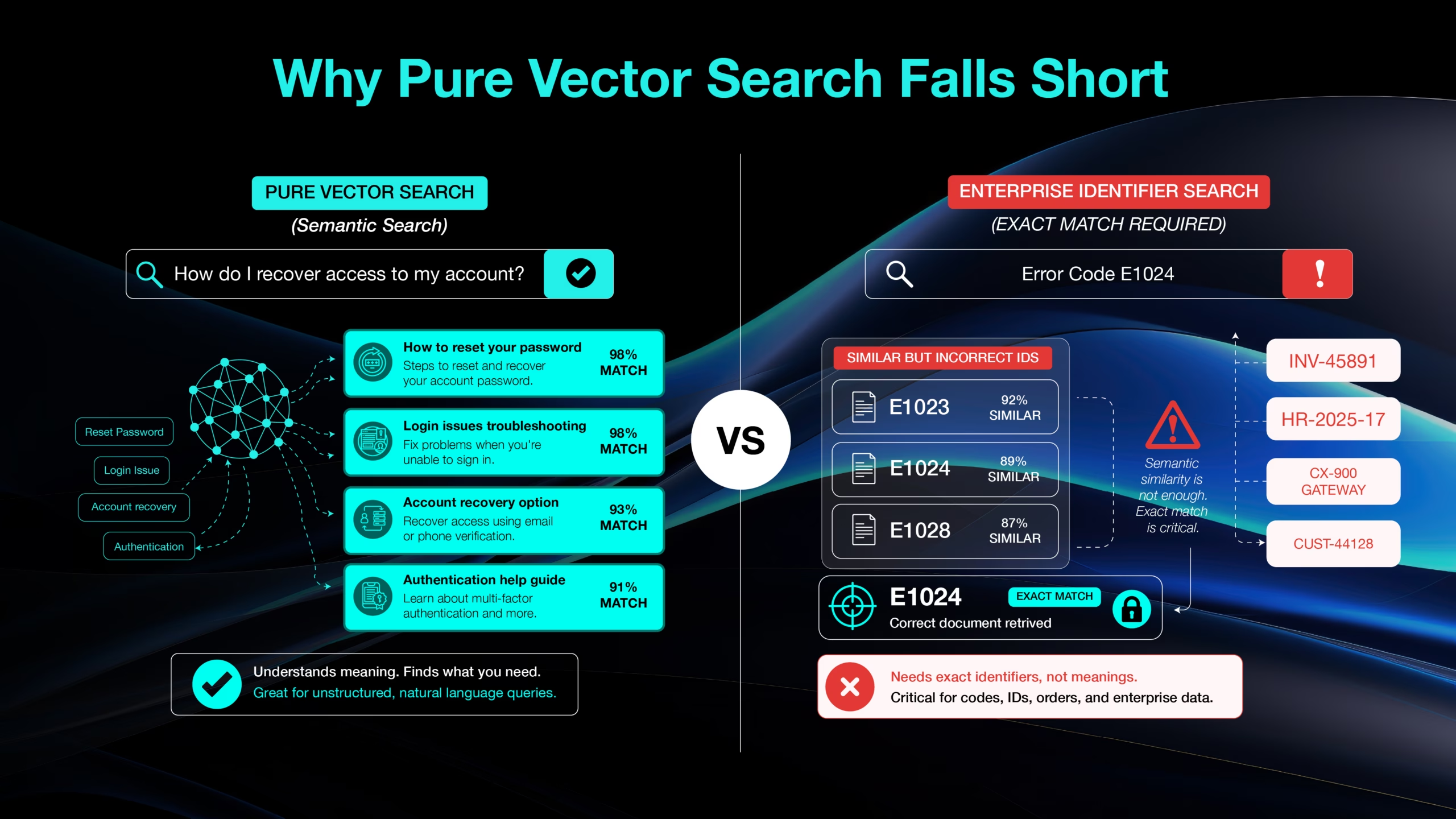
These identifiers have little semantic meaning. They’re designed to be unique. A vector search engine may retrieve similar documents but miss the exact record the user needs.
This is one of the most common reasons enterprise RAG applications underperform in production.
Enterprise Search Requires More Than Semantic Search
Modern organizations manage information across numerous structured and unstructured systems, including:
- Technical Documentation
- Contracts
- Support Tickets
- Product Catalogs
- ERP Systems
- CRM Platforms
- HR Policies
- Internal Wikis
- Source Code
- Structured Databases
Some queries depend on semantic understanding, while others require exact keyword matching—and many require both.
Others require precise keyword matching.
Many require both.
For example:
“Show the deployment guide for API version 3.2 that mentions OAuth token expiration.”
The phrase “OAuth token expiration” benefits from semantic retrieval.
The version number “3.2” requires exact matching.
A hybrid retrieval system handles both simultaneously.
How Hybrid Retrieval Works
Instead of relying on a single search technique, modern retrieval pipelines combine multiple methods.
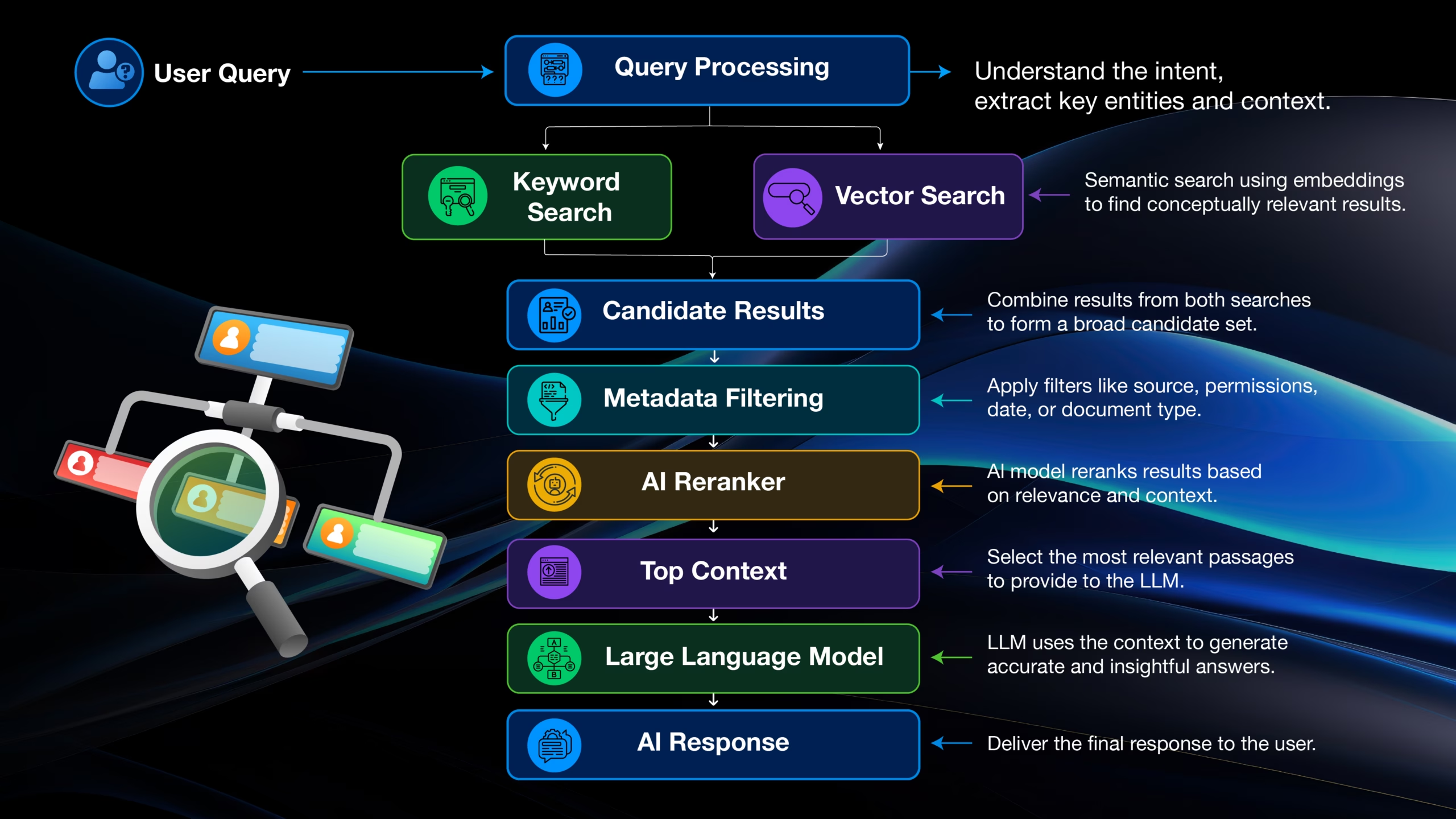
Each stage contributes its strengths, producing significantly more accurate retrieval than any single search method alone.
Why AI Reranking Matters
One of the biggest improvements in enterprise AI has come from reranking.
Initial retrieval may return 50 relevant documents.
A reranking model evaluates those results against the user’s query and identifies the handful that provide the strongest context for the LLM.
This significantly improves answer quality while reducing unnecessary context sent to the model.
In many enterprise deployments, reranking delivers a larger improvement than switching from one frontier language model to another.
Metadata Is Often the Missing Piece
Another lesson from production AI deployments is that metadata matters.
Documents should include attributes such as:
•Department
•Product
•Region
•Security classification
•Version
•Effective date
•Language
• Document owner
Metadata enables precise filtering before semantic ranking begins.
For example:
“Show finance policies approved after January 2026 for the European region.”
Without metadata filtering, semantic search alone may retrieve outdated or irrelevant documents
Hybrid Retrieval Reduces Hallucinations
Many AI hallucinations originate long before the language model begins generating text.
If retrieval returns incomplete, outdated, or irrelevant information, even the most advanced LLM is forced to answer with insufficient context.
Improving retrieval quality often has a greater impact on response accuracy than upgrading the language model itself.
This is why organizations are investing more effort in retrieval architecture than model selection.
Building Enterprise AI That Scales
Successful enterprise AI platforms increasingly combine:
- Semantic Vector Search
- Keyword Search
- Metadata Filtering
- Document Chunking Strategies
- AI Reranking
- Access Control
- Continuous Indexing
- Retrieval Evaluation
Together, these capabilities provide the high-quality context that enterprise AI applications require for reliable decision-making.
Final Thoughts
Enterprise AI has evolved beyond choosing the most powerful language model. Today, competitive advantage comes from building an intelligent retrieval pipeline that delivers precise, trustworthy, and context-rich information.
Vector databases remain a foundational component of Retrieval-Augmented Generation, but production-grade AI systems now depend on hybrid retrieval architectures that combine semantic understanding with keyword search, metadata filtering, and AI reranking.
Organizations investing in hybrid retrieval today are building AI assistants that are more accurate, scalable, secure, and capable of delivering enterprise-grade performance across complex knowledge ecosystems.